Tags
author, entertainment, fun, humor, icanhascheezburger, lol, Stephanie Beavers, writer
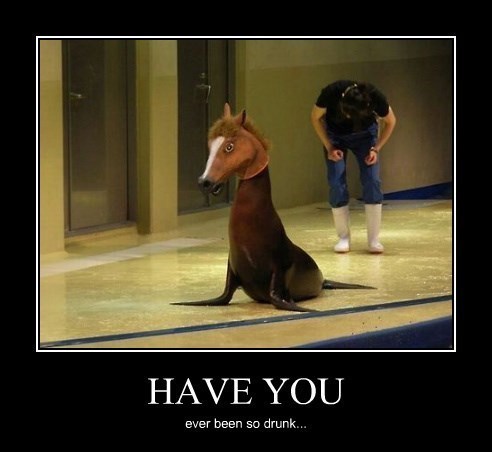
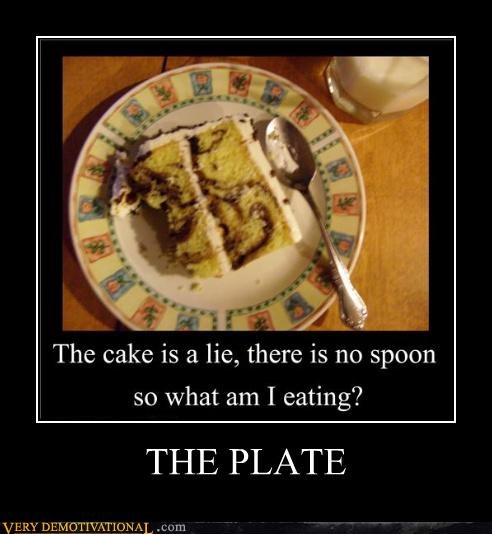
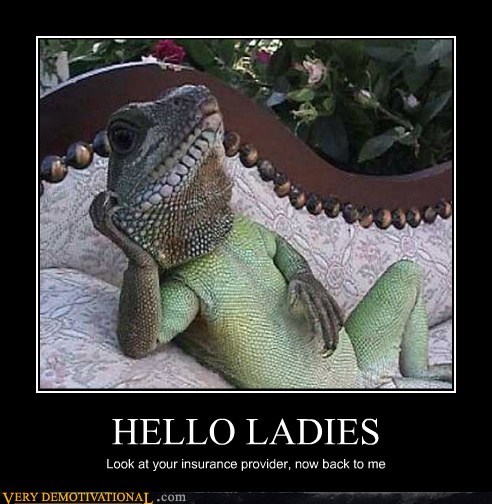
Please enjoy some random humor, brought to you by the Cheezburger Network.



04 Thursday Feb 2016
Posted in Fun
Tags
author, entertainment, fun, humor, icanhascheezburger, lol, Stephanie Beavers, writer
Please enjoy some random humor, brought to you by the Cheezburger Network.
01 Monday Feb 2016
Posted in Fun
Tags
author, because reasons, Death Star, entertainment, fun, giant laser, lasers, Science, science fiction, scifi, Star Wars, Stephanie Beavers, writer
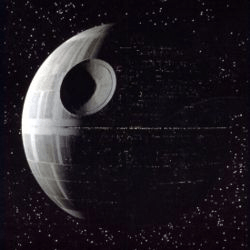
I was having trouble blogging, so my fiance helped me. This is the result. Why should we build a Death Star? Here are his thoughts… (Okay yeah, mixed with mine.)
1. Economic benefits
Building a Death Star would be a massive capital project, causing multi-national economic stimulus. Such a construction project would require huge numbers of people and resources, generating jobs and all those other good things.
2. Unified Purpose
Building a Death Star would require a large scale coalition dedicated towards a common goal, helping to alleviate regional struggles and conflicts. If we really want to finish our Death Star, we can’t be stirring trouble up with our neighbors.
3. Technological Innovation
Building a Death Star would provide high pressure motivation to develop and test real-world, practical technologies. Obviously we don’t yet know how to build things in space or create planet-destroying lasers. We’d have to work on it. And think of all the other cool things we’d learn in the process.
4. Alternative Mining Methods
Building a Death Star would require massive amounts of resources. We would have to start mining meteors and other small scale celestial bodies. Note that developing the technology and doing so would likely reduce mining on earth, preventing further damage to our own planet caused by such activities. And who know what other industries we might relocate beyond our planet’s surface once the technology arises.
5. Life Boat
If things go bad on Planet Earth, we can abandon ship and hop on our Death Star. Theoretically, we’d have also developed space travel a little by then, and we could salvage a large portion of the planet’s population.
6. Asteroid Shield
There’s nothing like a gigantic laser to destroy asteroids before they can hit Earth.

7. Deterrent Against Potentially Hostile Alien Life
Who wants to screw with a Death Star?
8. Defense Against Less Intelligent Hostile Alien Life
Shouldn’t have screwed with the Death Star. Aliens go bye-bye.
Now, of course there are also reasons why building a Death Star might be bad (after all, we never abuse any technologies we invent), but that’s a story for another blog.
What do you think, readers? Are these good reasons to build a Death Star? (You know it would be awesome.)
28 Thursday Jan 2016
Posted in Fun
Tags
Aladdin, author, Beauty and the Beast, cement mixers, Disney, Disney princesses, entertainment, Frozen, humor, just because, Little Mermaid, lol, Mulan, Pocahontas, princess, random, Stephanie Beavers, writer
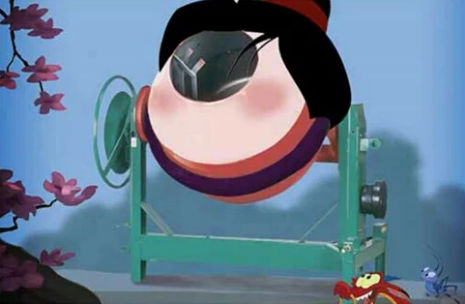
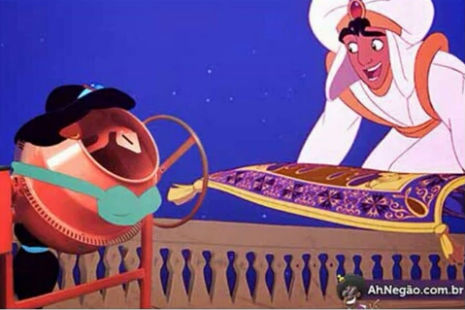
The internet. Anything can happen. So here are some Disney Princesses re-imagined as cement mixers. I found them here.



25 Monday Jan 2016
Posted in News
Tags
1984, ai, artificial intelligence, author, cyborgs, evil overlords, matrix, minority report, robots, Science, science news, Stephanie Beavers, technology, terminator, writer
Living things accumulate and reproduce information. That’s really the driving principle behind life, and behind evolution.
But humans have invented a new method of accumulating and reproducing information. It’s digital information, and it’s growing at an astonishing speed. The number of people using the internet is growing, as are the devices connected to it through the Internet of Things.

Photo credit: Beware the digital evolution. Pixabay, CC BY
Digital information can copy itself perfectly, increases in copy number with every download or view, can be modified (mutated), or combined to generate novel information packets. And it can be expressed through artificial intelligence. These are characteristics similar to living things. So we should probably start thinking about digital technology as being like an organism that can evolve.
Digital information replicates with virtually no energy costs, and has rapid generation times. Artificial intelligence can beat us in chess and on game shows. What’s more, it’s faster than us, smarter than us in some arenas, and is already in charge of activities that are too complex for us to do efficiently.
To biologists, that sounds like the digital world might be able to out-compete us, as we argue in a paper published in Trends in Ecology & Evolution.
Information Growth
Any newly evolving entity can cause upheavals for life on Earth. In fact, all the major evolutionary transitions in the history of life have come about via changes to information storage and transmission.
And the digital revolution has certainly changed the way information is stored and transmitted.
The current storage capacity of the internet is approaching 1024 bytes and is growing at 30% to 40% per year, showing no signs of slowing down.
In the 3.7 billion years since life began, information in living things (DNA) has reached the equivalent of about 1037 bytes. Digital information will grow to this size in 100 years. That’s an evolutionary eye-blink.
Winners And Losers
During each evolutionary transition, there have been winners and losers. And we need to start asking if the digital transition poses a danger to humanity. We do have the advantage of hindsight to answer this question.
We know that each of earth’s evolutionary transitions essentially resulted in the enslavement of the old information carriers. RNA was the original carrier of information. When DNA came along, the role of RNA was relegated to simply relaying messages from DNA to the cell.
When complex cells arose, they subsumed simpler bacterial cells. These became power generators (mitochondria) or solar panels (chloroplasts), serving the needs of the new cell types.
The next transition resulted in organisms with multiple cells. Most of these cells did not pass their information to the next generation, but existed simply to support those few cells that did.
The development of nervous systems that collected information from the environment provided huge advantages for animals. This activity reached its peak in human societies, with transmission of information between generations, via language and culture.
This allowed humans to dominate the planet, such that we have triggered a new geological epoch, the Anthropocene.
Extinctions
So the lessons of evolutionary history are clear. Transitions in the way information is replicated and stored often make existing organisms extinct, can lead to parasitism, or in the best case scenario, lead to a co-operative, mutual relationship.
Global leaders are already warning about the danger of autonomous military robots taking over the world, reminiscent of horror science fiction such as The Terminator.
We are increasingly connected to the digital world via devices, and direct connections to our brains are on the horizon. If we fuse our brains with the internet we may gain new sensory and cognitive capabilities.
But we may also lose our grasp of what is “us” and what is “real” (The Matrix, Inception), or expose ourselves to digital parasites.
As our activities and physiological states are increasingly being monitored, tracked and analysed, our every thought and action could be predicted (George Orwell’s 1984 or the Minority Report). Biological information systems might then become a predictable cog in a digitally governed social system.
Decision systems and artificial intelligence networks mimic human brains, and coordinate our everyday interactions. They decide on what internet advertisements we are exposed to, execute the majority of stock exchange transactions and run electric power grids. They also have a significant role in human mate choice via internet dating sites.
While we do not necessarily feel that we are the mere flesh-bots of our digital overlords, the merging of humans with the digital world has now passed the point of no return.
In biological terms, fusions like these between two unrelated organisms are called symbioses. In nature, all symbioses have the potential to turn into a parasitic relationship, where one organism fares much better than the other.
We need to start thinking about the internet as an organism that can evolve. Whether it cooperates or competes with us is cause for considerable concern.
Michael Gillings, Professor of Molecular Evolution; Darrell Kemp, Senior Lecturer in Biological Sciences, and Martin Hilbert, Professor in Communication, University of California, Davis
This article was originally published on The Conversation. Read the original article.
21 Thursday Jan 2016
Posted in Fun
18 Monday Jan 2016
Posted in News
Tags
animal, animals, author, badass, birds, clever, creepy, falcons, hawks, nature, scarier than you, Science, science news, smarter than you, Stephanie Beavers, wildlife, writer
Fiendish Falcons Keep Birds Prisoner Before Eating Them
Australian Raptors May Be Playing With Fire
So it turns out that birds are terrifying. Majestic, oh yeah, but beneath that majesty are some twisted little birdies.

There are some falcons in Morocco that, around egg-hatching season, take some pretty extreme measures to keep their food “fresh.” Why eat rotten bird when you can “[stuff] small birds into small crevices, ensuring they were tightly wedged in and unable to escape,” or dropping “small migratory birds [into] holes and fissures with their flight and tail feathers removed” so they couldn’t fly away. Now, I know nature can be cruel, and I don’t doubt that having fresh food for the hatchlings is an evolutionary advantage, but…yikes. This is downright creepy.
Haven’t had enough cruel animal brilliance? How about this one. There are many stories and evidence to suggest that birds of prey in Australia are starting fires to flush out prey. They’re not just taking advantage of existing wildfires that drive small creatures from their homes. Oh no, They are “picking up smoldering sticks and dropping them in unburnt territory.” It’s another creepy, evolutionarily advantageous behavior.
“Reptiles, frogs and insects rush out from the fire, and there are birds that wait in front, right at the foot of the fire, waiting to catch them,” Gosford said. Small fires often attract so many birds that there is insufficient fleeing prey for all, so a bird that was being beaten to its lunch might benefit from starting a new fire with less competition.
So yeah, you could say that these birds are scarier than you. When was the last time you started a fire to flush out lunch?
14 Thursday Jan 2016
Posted in Fun
Tags
antihero, author, Deadpool, Marvel, movies, not a hero at all, Stephanie Beavers, superhero, Valentine, Valentine's, Valentine's Day, writer
Heck yeah we’re seeing Deadpool on Valentine’s Day.
I think it’s hilarious the array of movie posters that Deadpool has. Check a few of them out:





I honestly can’t recall ever seeing a movie with advertising this varied before. You?
11 Monday Jan 2016
Posted in News
Tags
183 years old, advertising, animal, animals, author, diet, News, old tortoise, phishing, spamming, Stephanie Beavers, tortoise, wildlife, writer
I was browsing animal news on National Geographic when I came across this: Healthy Diet Helps 183-Year-Old Tortoise Feel Young Again …And I immediately did a mental facepalm.
Am I the only one who immediately thought of all those cheesy alarmist/click-me-now-before-you-think ads that permeate the internet? Like this headline: “Enjoy Flat Abs With These 10 Super Foods” or this one: “30 Mind Blowing Photos You Won’t Believe Are Real.” We’ve all seen the ads. They’re impossible to avoid, even with the best ad-blocker.
I mean, I’m happy that Mr. 183-Year Old Tortoise is feeling better, but don’t you feel like, if you read the article, someone’s going to try to sell you a dieting program or phish your information? I’m not sure what my point is, but I thought it was hilarious and wanted to share.
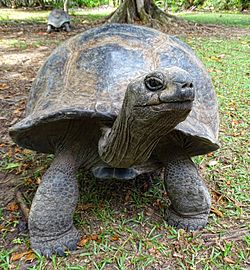
An Aldabra Tortoise
In any case, that’s one very old tortoise, and it’s entirely possible I’ll die before he will. Live long and prosper, Jonathan The Tortoise.
07 Thursday Jan 2016
Posted in News
Tags
animal, animals, author, cat, cats, cougar, mutant, mutation, Science, science fiction, science news, Stephanie Beavers, wildlife, writer
So this is a little disturbing:

An anonymous hunter shot the above cougar in Idaho. And it evidently has… horns? teeth? growing out of its head.
The hunter didn’t know it, but he stumbled across the machinations of an evil scientist creating an army of mutant animals! Maybe. …Okay, probably not.
Still, it’s a little disconcerting. IFLS has more details, but in short, no one knows what exactly is up with this twisted kitty.
Here are the theories:
“Firstly, it could be that it has a teratoma. This is a rare type of tumor that spawns a grotesque growth capable of containing hair, bone, teeth, and even parts of limbs or organs. These tumors are incredibly rare in humans, although there have been a few isolated examples in the animal kingdom among dogs, horses, and other mammals.
Second, it could be the remnants of a “conjoined twin” that possibly died in the womb and was absorbed by the mountain lion.
Lastly, it could be the result of an injury to the cougar’s teeth or jaw, which healed in an unfortunate way. Zach Lockyer, a local wildlife biologist, told Idaho State Journal that this is perhaps the least likely of the possibilities as the image doesn’t appear to show any injury or trauma around the jaw.”
So readers, what do you think caused it? Teratoma, conjoined twin, trauma, or evil scientist?
04 Monday Jan 2016
Posted in Writing
Tags
author, books, Kristen Lamb, marketing, reading, Stephanie Beavers, writer
Happy New Year!
Check out this awesome blog. Kristen usually blogs for writers, but this one is highly relevant to all readers too! Check it out.
 Too many choices!
We’ve had an eventful week or so with my last couple of unplanned posts. In all fairness, I did expect to get some knickers in a twist (which I did) with my post Pay the Writer. As a quick recap, I love used bookstores. They get a lot more of my money than I like to admit *looks up number to 12 Step Sponsor*
You don’t understand. Half Price Books has books ZEN DOODLES. No frigging idea what those are…just that I need some.
I’m not against “discovering” an author there.
But writers? If we promote used bookstores, make sure to remind readers you don’t get paid that way. Discovery must serve a purpose. Exposure must have the follow-up to be effective.
Because if you don’t ever make any money, you have to go work retail. If you work retail, one day you will be asked one too many stupid…
View original post 3,004 more words





 Stephanie Beavers