Weasel Thumb War

Tags

, , , , , , , , , , , ,

This weasel is waging “war” on a thumb. Prepare to squee.

As noted in the video’s description, weasels typically do NOT make good pets. Still, that doesn’t stop them from being frickin’ adorable.

Game of Rabbit Thrones

Tags

, , , , , , , , , , , , , , , , , ,

The first 20 seconds are like, “is this just gonna be dumb? It looks like it might be dumb.” But seriously, watch to the end.

Rabbit = 1, King’s Land = 0 (This rabbit is dynamite! …And eats a castle.)

Thanks to icanhascheezburger.

Incoherent Mind-Reading

Tags

, , , , , , , , ,

What if mind reading were real?

In TV, movies, and books, when a telepath reads someone’s mind, it’s typically depicted as hearing words. Also typically, these words form complete sentences and ideas. But really, who thinks like that?

First of all, do we really think in words all the time? I don’t think we do. At least, I’m pretty sure that I don’t. Sometimes I think in pictures, or concepts. When you think of your mother, do you see or hear the word “mother” inside your head, or do you generate a picture and/or the feelings and memories of that person in your mind? I would go so far as to say we never think only with words. There are always emotions and memories (and sometimes sights/sounds/etc) attached to what we’re thinking.

So theoretically, if someone could read minds, how much would they be able to “read”? Would they only hear words, or would they sense concepts and pictures and feelings and everything else that go with thoughts?

tin foil hat

Tin foil will keep you from stealing my brain-thoughts!

It goes further.

How do we think? Or rather, in what manner do we think? Do we really think in complete sentences and form whole ideas in our heads? Sometimes, certainly. But not always. Think about it. Right now you’re concentrating on reading and/or thinking about the subject matter, but next time your thoughts wander, try to take notice. While thinking, are you stuck solely on one topic and fully form each idea that enters your mind? No! (Or at least, that’s not the case for me.)

When I get lost in thought, my mind wanders. It flits from topic to topic. Someone mentions their cat, which makes me think of my cat and how she was being obnoxiously vocal and it was because I’d let her food dish get empty even though there was more cat food because I got some the day before but oh I forgot to get more cereal when I was at the store and I should stop and get some today after work but I’ll go to the other store because it’s close to the other store where I’m picking up a birthday present for my friend but should I really get that for my friend or is it kinda cool but really useless–

Well, you get the picture. And remember, I’m being forced by the medium to use words, which is already clarifying these thoughts far further than they may have occurred inside my head.

My point is, if someone could actually read minds, would they actually be able to understand anything? Or would it all be too muddled or fleeting or self-involved or abstract to truly comprehend?

It’s something to think about (if you’re so inclined).

What do you think, readers? Is mind-reading even possibly coherent even if it could happen in physical practice? Am I over-complicating things? Or do you think most people are a little less ADHD than I am? Share your thoughts!


Chocolate: The Latest Health Food

Tags

, , , , , , , , , ,

Well, okay, not really, but scientists have discovered how to make it healthier than it is!

Scientists Work Out How To Make Chocolate Healthier And More Flavorful

So binging on cheap chocolate with never reduce your waist-line, but as IFLS puts it:

Good news, chocoholics: Scientists have found a way to not only make chocolate more nutritious, but also to enhance its taste. Praise science!

We’ve all seen the articles touting the benefits of chocolate, especially dark chocolate, with some of its antioxidant and anti-inflammatory properties. Eating small amounts regularly can theoretically help result in lower blood pressure and a reduced chance of stroke and cardiovascular diseases.

The good news is, scientists have figured out how to enhance those beneficial properties. The great news is, they’ve found out that enhancing the beneficial properties of chocolate also enhances the taste. For ONCE, making something healthier makes it taste better instead of worse!

chocolate brownie cake

Health food! …Sorta.

In short, these cheer-inducing results are brought about by adding a step to the bean-harvesting process (temporary storage of the pods before beginning processing them), and roasting the cocoa beans longer at a lower temperature.

Now, longer typically means more expensive (this is conjecture on my part), so I’m guessing that not all chocolate-producers are going to embrace these new methods. But we should still see this new chocolate around, and I, for one, look forward to it!

The Origins of the Easter Bunny

Tags

, , , , , , , , , , , ,

This week we get a Tuesday blog ’cause it’s my blog and I feel like it.

I hope you all had a wonderful Easter full of chocolate (yay for chocolate holidays!) and whatever else floats your boat (family, friends, and hopefully days off). Anyways, Easter got me thinking. About the Easter Bunny (what a shocker, hey). But when you do actually stop and think about the Easter Bunny, it’s really a rather strange phenomenon. I mean, a rabbit that delivers eggs?

easter bunny with easter eggs

My boyfriend insisted that the Easter Bunny originated as a practical joke. Like, “Hey look kids, that bunny left some ‘chocolate eggs’ under that bush for you, you should eat them.”

rabbit poop

“Chocolate eggs”

So I looked it up.

Wikipedia knows all. Here’s the DL.

In antiquity, both rabbits and eggs were symbols of fertility and thus, springtime. At the same time, eggs were a popular food to abstain from during Lent. People would boil eggs to preserve them through Lent. Presumably, they painted them for kicks and because they’d be looking at them for awhile. German mythology arose that good children would be given eggs by the Easter Hare (not rabbit). Chocolate eggs seem to be a more recent development (sorry, hon). But maybe the bad children got rabbit poop.

Now you know.

So tell me, readers, did you know about the history of the Easter Bunny? Ever wonder? Ever…have theories of your own? :D Let me know in the comments!

I, for one, welcome our feline overlords

Tags

, , , , , , , , , , , , , , , , ,

Now, we all know that the only thing standing between cats and world domination is the lack of opposable thumbs.
https://youtu.be/h6CcxJQq1x8

But what here’s an even more frightening thought: what if they don’t need even that?
Lion Learns To Open Car Doors

Nevermind computer overlords. Cats are the true kings (and queens) of the jungle… urban or otherwise?

This is proof that it’s only a matter of time, my friends. It’s only a matter of time.

Pets to make you smile

Tags

, , , , , , , , , , , ,

loyal cat smile
obedient pig
lazy dog snow shovel
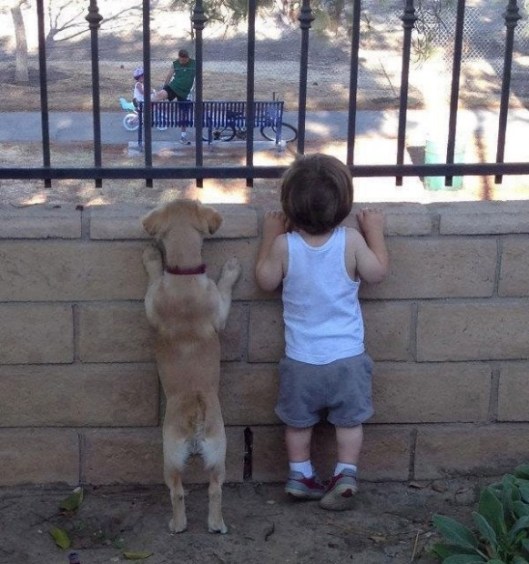
puppy child conspirator
Angie cat loves her jar

Refrigerator Abductions

Tags

, , , , , , , ,

So I was digging through some old stuff the other day and found a little excerpt of writing. I don’t know how long ago I wrote it, but it’s mildly amusing (if a little incomplete-feeling), so I thought I’d share it. Here goes:

“Fridges make noises when they run. They just do, and my family’s is no exception. I was lying in bed, and its pervasive hum filled my ears. Now, normally refrigerator humming isn’t my first choice of music, but recall that it was bedtime, so I was supposed to be sleeping. But tonight the fridge sounded different. It sounded strange. It sounded like an alien tractor beam.

Normally its tone was largely monotonous; tonight it slid between two tones: “wo-wo-wo-wo-wo.” I became convinced that our fridge had been abducted. It had been abducted, experimented on, and then returned without our ever having realized it had gone missing. While abducted, it had been implanted with malevolent sentience: our fridge was going to kill us all. That sound was the preparation of the tractor beam. As soon as we fell asleep, it would draw the first person inside. Once inside, one could claw and scream without ever being heard; death would be slow, by hypothermia.

It was up to me to remain vigilant; up to me to guard against this seemingly innocent kitchen appliance. No one else would suspect, but I knew: it had betrayed itself by warming the tractor beam too early.”

So there you have it, just a silly little snippet of writing, a tangent spurred by my environment.

What, I thought you wanted to know where writers got their ideas from?

evil killer fridge

Selling Wine with Witty Reviews

Tags

, , , , , , , , , ,

So Jeff W. really knows how to sell wine.
wine rack review
wine review
wine review
wine review
wine review
wine review
wine review
wine review

Navigating With Medieval Ingenuity

Tags

, , , , , , , , , , , ,

Forget GPS: Medieval Compass Guided Vikings After Sunset

Navigation: today we use satellites. “Yesterday” we used magnets. Before that? Researchers are arguing Vikings may have used sunstones.

Sunstones can be used to track the position of the sun, even when it’s behind clouds or below the horizon. Now, researchers have figured out how it works. The theory is interesting.

A certain transparent calcite found commonly in Iceland can be used as a “sunstone.” Discovery News explains: “Light passing through such a crystal…changes in brightness and color as the crystal is rotated. Vikings presumably could have used such crystals to observe polarization patterns and thereby pinpoint the direction of the sun.” “[W]ith the crystal held up to the sky, there is one specific angle of rotation, called the isotropy point, at which the crystal eliminates all polarization of the light passing through it.” “The investigators say that if you look through the crystal in its depolarizing position and then pull it away suddenly from your line of sight, you can catch a glimpse of a faint, elongate yellowish pattern known as a Haidinger’s Brush. The key here is that the ends of that yellow shape point directly toward the sun.”

clear mineral calcite sunstone

When you know where the sun is, you can find your way. Researchers have found that this method of navigating is as accurate as using a magnetic compass, and more accurate than using stars. “Coupled with a second technique observing the changing polarization patterns passing through the crystal, also tested and described for the first time in this study, the Vikings could have established a reference point that could be used even when the sun was fully hidden, upping the sunstone’s accuracy to within 1 degree.”

Now the controversy comes in because no sunstone has been found in Viking villages or near Viking remains, although there are some scraps of art and literature remaining that suggest they may have used this tool.

There is a tendency in popular culture to describe past peoples are stupid, but they just didn’t have the foundation of accumulated knowledge that we have to work with. They were at least as smart as we are today, and discoveries of tools like this prove it.