So Boston Dynamics had created a robotic dog named Spot. See the video below.
Now, I’m sure you all picked out their number one mistake immediately. Yes, that’s right, they abused Spot. Now, how do you think things are going to play out for them when machines become our overlords and rule us with an iron fist? I think Spot will remember being kicked.
Science has done it! We have invented a technology that will allow us to climb anything!*
*One day, maybe.
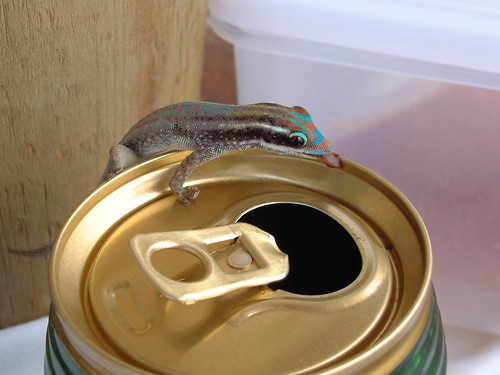
In actuality, they’ve created gecko-feet-inspired climbing pads that can allow you to scale a vertical glass wall. Want to imitate Spiderman? Invest in some of these.*
*I don’t know if these are or ever will be for sale.
IFLS explains the science behind it as simply and comprehensively as only IFLS can (see link above). Essentially, instead of using one large suction device (as they attempted in the past), they’re using a multitude of little ones. As we’ve discovered with science in the past, bigger isn’t always better.
Scientists hope that this technology will help astronauts in space in the future, although DARPA plans to give it to their soldiers.
So what do you think, readers? Want some gecko pads for some free climbing? Or would you rather stay on the ground like me?
Dreams. No one really knows why we dream, but everyone has an opinion. Do they mean something or are they just garbage our brain is trying to process and throw out?
Here’s a nice summary of scientific thought on dreams:
Honestly, I’ve always thought dreams are more like garbage. I rarely remember my dreams, and when I do, they’re incoherent and nonsensical. And yet… every so often I’ll have a dream that I find myself wanting to attribute meaning to. Friday night I had a dream that I packed a bunch of stuff into my Jeep (including my cat) and drove off. I wound up visiting some relatives on their farm as my first stop to driving across the US.
Now where did that come from? I have a little turbulence in my life right now (some good, some less good), but I haven’t been giving holiday or travel (or even running away) any kind of thought lately. And yet the feeling of wanting to move, to just pick up and go, stuck with me powerfully for a few hours after waking up. I found myself wondering what it meant.
Why do we do that? Why do we try to attribute meaning to dreams? As I mentioned before, most of my other dreams are “dead flies and bits of fluff,” garbage that my brain is filtering out and throwing away.
And of course, not everyone shares my “garbage” view of dreams. Historically speaking, all kinds of meaning has been ascribed to dreams across all kinds of cultures (think oracles and prophets especially). Is this just a sign of human beings desperately trying to make sense of the world around us?
What do you think, readers? Have you had any (or many) dreams that you’ve sought or found meaning in? Do you think dreams are meaningful? Share your thoughts!
Today, in creepy science news, we have electric eels and the latest from DARPA. Turns humans aren’t so clever for creating remote-controlled stuff.
(Some people are less creepy about it. DARPA’s new stuff is at least as unnerving as this. Keep reading.)
Electric eels, it turns out, can create electric currents to locate and then immobilize prey. It goes like this: the eel swims along, looking for food. Every so often it sends out a little pulse. When the pulse hits a fish all silent and hiding, the fish involuntarily jerks. The eels senses the movement. Before the fish can escape, the eel sends out a bigger jolt that freezes the fish’s muscles so it can’t swim away.
I can think of some uses for an ability like that… mostly the second one. Check out the link at the top for more details and a cool video.
In more human news, DARPA has finally created target-seeking bullets. These bullets can literally change direction mid-flight to adjust its course and hit its target. Not intimidating at all. For all the paranoid folk out there: you can no longer count on inclement conditions or long distances to keep you safe from sniper bullets. These bullets will find you. They will find you.
Ahem.
So hope you all had a wonderful holiday season, without to much stress and at least one cool present.
So what do you think is creepier? Natures version or ours? Or are you super awesome and know about these things already?
Good news, everybody! After the surface of the earth has been reduced to a toxic wasteland, these guys will have a way to create scenic nature areas underground. (For those of us who hate how blah and dirty post-apocalyptic refuges are in movies and whatnot, this is excellent news.) The Lowline project seeks to redirect solar energy from the sunlight above on the streets to their underground park, a former trolley terminal. They’re also going to keep some of the terminal’s history alive, adding a little culture to complement the nature they plan to cultivate.
Really though, I think this is an awesome idea. One of the problems with cities is their impact on nature. Parks take up space, precious real estate that people want to capitalize on. “Building up” doesn’t work great with parks… but what about down? I hope these guys get the funding they need to make this underground park a reality. Let’s hear it for a little more nature!
What do you think, readers? Cool and innovative or impractical and silly?
Y’know, I’ve never actually looked into all that prenatal learning stuff, but I’ve always idly wondered about those mothers who press earphones playing Mozart against their swollen bellies… are they crazy, or is there something to it?
Well, for wrens, the babies definitely learn in the egg. Scientists played various sounds and calls and reached the conclusion that yes, baby birds learn in their eggs. Cue the rounds of aaaaaaw. (I have a mental picture of a little baby bird rocking out to earphones inside his egg.)
As it turns out, baby cries both animal and human have a lot in common, too. Mothers of various animal species would attempt to locate the source of distressed baby cries regardless of the species making the cry. Turns out parenthood unites mothers of all species.
Although really… scientists needed to do a study to verify this? I think most of us have felt our heartstrings tugged by the cries of distressed baby animals before. There are too many adorable internet videos for that not to be the case. INTERNET, PROVE ME RIGHT FOR SCIENCE!
Let’s read that again. It’s jewelry that HARVESTS ENERGY from your VEINS.
Need a charge? Just STAB your jewelry straight into your own body to draw a charge!
(I may be a tad SCARED SKINNY of needles.)
Didn’t she watch The Matrix? We shouldn’t be giving our own technology the idea that we can be used as human batteries!
Okay, so you may have noticed me taking a hypochondriac’s spin here. In fair representation, Naomi Kizhner created these devices as a social commentary on human energy consumption, not as a practical way to harvest energy. (Although I still say sticking a couple needles into yourself to make a wheel spin inside a transparent casing is CREEPY, but there you go.) In her words, the jewelry is a discussion piece “about how far will we go to in order to ‘feed’ our addiction in the world of declining resources.”
Check out her website to see these torture devices.
Some animals have the most extraordinary navigational abilities. Some days it seems like there’s nothing new for science to discover when it comes to the mammals we’re so familiar with, like birds and cats, but really, we’ve barely scratched the surface. The article above shares an anecdote about someone’s cat: the cat belonged to a local family, had been lost on a trip two months earlier, and had traveled 200 miles (322 km) in that time to arrive back in her hometown. Scientists have no idea how the cat was able to do that.
I can find my way home.
We do understand how some animals navigate. Dung beetles use the stars, as do seabirds (seabirds use the sun too). Some use Earth’s magnetic fields; sea turtles are born with a magnetic map of the ocean in their heads, allowing freshly hatched babies to run to the ocean and find feeding and breeding grounds. Of course, we’re not sure how exactly they sense and use magnetic fields to navigate, but we know that’s how they’re doing it. Seabirds get lost when it’s overcast, and sea turtles will go the wrong way when presented with artificial magnetic fields. Many animals can also sense things we can’t; a dog’s sense of smell is a prime example.
Maybe this is a reminder for us human beings to keep in mind that there’s more to our world – even the more obvious parts of our world – than we know.
3D Printing. We’ve basically all heard about it; people make their own toys and jewelry and knickknacks. But now, the technology is progressing to a new level. A little tweaking is required yet for most of these, but still. (If you just want to learn a little more about 3D printing in general, this is a nice overview.)
How would you like a 3D printed saxophone?
That last, of course, is the most controversial. We’re all for 3D printing low-cost housing or making cheap toys, but GUNS? Once again, we have a piece of technology that’s truly wonderful but has some (at the very least) controversial implications and possibilities.




 Stephanie Beavers