So Boston Dynamics had created a robotic dog named Spot. See the video below.
Now, I’m sure you all picked out their number one mistake immediately. Yes, that’s right, they abused Spot. Now, how do you think things are going to play out for them when machines become our overlords and rule us with an iron fist? I think Spot will remember being kicked.
Science has done it! We have invented a technology that will allow us to climb anything!*
*One day, maybe.
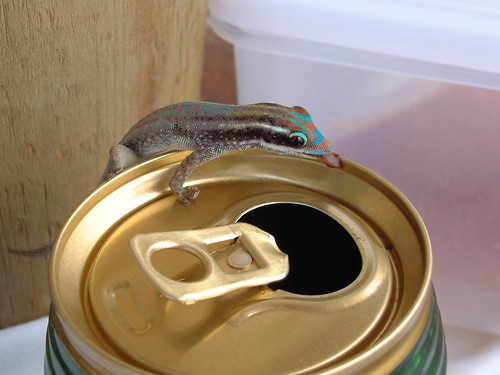
In actuality, they’ve created gecko-feet-inspired climbing pads that can allow you to scale a vertical glass wall. Want to imitate Spiderman? Invest in some of these.*
*I don’t know if these are or ever will be for sale.
IFLS explains the science behind it as simply and comprehensively as only IFLS can (see link above). Essentially, instead of using one large suction device (as they attempted in the past), they’re using a multitude of little ones. As we’ve discovered with science in the past, bigger isn’t always better.
Scientists hope that this technology will help astronauts in space in the future, although DARPA plans to give it to their soldiers.
So what do you think, readers? Want some gecko pads for some free climbing? Or would you rather stay on the ground like me?
Today, in creepy science news, we have electric eels and the latest from DARPA. Turns humans aren’t so clever for creating remote-controlled stuff.
(Some people are less creepy about it. DARPA’s new stuff is at least as unnerving as this. Keep reading.)
Electric eels, it turns out, can create electric currents to locate and then immobilize prey. It goes like this: the eel swims along, looking for food. Every so often it sends out a little pulse. When the pulse hits a fish all silent and hiding, the fish involuntarily jerks. The eels senses the movement. Before the fish can escape, the eel sends out a bigger jolt that freezes the fish’s muscles so it can’t swim away.
I can think of some uses for an ability like that… mostly the second one. Check out the link at the top for more details and a cool video.
In more human news, DARPA has finally created target-seeking bullets. These bullets can literally change direction mid-flight to adjust its course and hit its target. Not intimidating at all. For all the paranoid folk out there: you can no longer count on inclement conditions or long distances to keep you safe from sniper bullets. These bullets will find you. They will find you.
Ahem.
So hope you all had a wonderful holiday season, without to much stress and at least one cool present.
So what do you think is creepier? Natures version or ours? Or are you super awesome and know about these things already?
Good news, everybody! After the surface of the earth has been reduced to a toxic wasteland, these guys will have a way to create scenic nature areas underground. (For those of us who hate how blah and dirty post-apocalyptic refuges are in movies and whatnot, this is excellent news.) The Lowline project seeks to redirect solar energy from the sunlight above on the streets to their underground park, a former trolley terminal. They’re also going to keep some of the terminal’s history alive, adding a little culture to complement the nature they plan to cultivate.
Really though, I think this is an awesome idea. One of the problems with cities is their impact on nature. Parks take up space, precious real estate that people want to capitalize on. “Building up” doesn’t work great with parks… but what about down? I hope these guys get the funding they need to make this underground park a reality. Let’s hear it for a little more nature!
What do you think, readers? Cool and innovative or impractical and silly?
Let’s read that again. It’s jewelry that HARVESTS ENERGY from your VEINS.
Need a charge? Just STAB your jewelry straight into your own body to draw a charge!
(I may be a tad SCARED SKINNY of needles.)
Didn’t she watch The Matrix? We shouldn’t be giving our own technology the idea that we can be used as human batteries!
Okay, so you may have noticed me taking a hypochondriac’s spin here. In fair representation, Naomi Kizhner created these devices as a social commentary on human energy consumption, not as a practical way to harvest energy. (Although I still say sticking a couple needles into yourself to make a wheel spin inside a transparent casing is CREEPY, but there you go.) In her words, the jewelry is a discussion piece “about how far will we go to in order to ‘feed’ our addiction in the world of declining resources.”
Check out her website to see these torture devices.
3D Printing. We’ve basically all heard about it; people make their own toys and jewelry and knickknacks. But now, the technology is progressing to a new level. A little tweaking is required yet for most of these, but still. (If you just want to learn a little more about 3D printing in general, this is a nice overview.)
How would you like a 3D printed saxophone?
That last, of course, is the most controversial. We’re all for 3D printing low-cost housing or making cheap toys, but GUNS? Once again, we have a piece of technology that’s truly wonderful but has some (at the very least) controversial implications and possibilities.
Okay, so not forever (yet), but 30% longer. Still, cool news in science.
By triggering a certain gene, scientists have increased the life span of some fruit flies by 30%. Basically, age makes us more susceptible to health problems as it our bodies lose the ability to regulate process and prevent disease. This gene, when activated, helps stave off that decline. So not only would the life span be 30% longer, it would add healthy years… and that’s pretty cool (especially if you’ve ready any fables about foolish heroes wishing for everlasting life and living a decrepit existence for the rest of eternity).
Researcher David Walker had the following to say:
We are not there yet, and it could, of course, take many years, but that is our goal and we think it is realistic.
The ultimate aim of our research is to promote healthy aging in people.
Of course, this is an example of playing with genetics, and we all know how insanely complex the human body is. Will this have other repercussions that we don’t know about yet? And even if it is as good as it sounds, what then? I’m always curious about the consequences of scientific advancement. 30% longer life spans wouldn’t have that big of an impact on the world… surely? Or would we see an increase in overpopulation? Or something else?
What do you think, readers? What are the best and worst case scenarios? Give me your thoughts!
It’s true. Human beings have now exchanged thoughts. What’s more, they did with 8,000 kilometers separating them. On one end, they read the brain activity of one person and transmitted it to the brain of the second person. The communication was very simple, and it had a small margin of error. This stuff may be small-scale, but it’s proof that it’s possible.
So the question is, is this where we’re headed? We can speak metaphorically about “living in the internet” and being cyborgs because we can’t put our phones down or leave our computers, but will we literally become cyborgs, with our computers in our heads?
Honestly, I find this terribly exciting, but I know I’m often an optimist about new technology. There are scary aspects to this kind of technology too. Are we also looking at the future of mind control?
So what do you think, readers? Where could this technology take us?
Hummingbirds Are More Efficient Than Helicopters When It Comes To Hovering IBM Reveals Incredible New Brain-Inspired Chip
I recommend reading both these articles (they’re cool) but the titles really convey all you need to know for this blog entry.
To me, articles like these are reminders to stop and reflect on how amazing life is. Life itself is a miracle. We exist in such beautiful, wonderful complexity, and we only barely understand the physical aspects of our existence, nevermind the spiritual aspects. This fills me with awe.
Sometimes it seems like scientists (at least as represented in pop culture) are too confident that we know all there is to know, or that humans know and can do better than nature. But really? It’s reassuring to see scientists looking to the world around us and realizing that there is still so much to learn. Even looking at the tiny, beautiful hummingbird, so fragile, yet so powerful, can teach us how to better build machines that can fly us around the world. Looking at the human brain can allow us to improve upon machines that can calculate equations no human brain could process without aids (if only a writing instrument and surface).
Sometimes people ask writers where they came up with their ideas. Especially in fantasy, given how departed it can be from reality. And one part of the answer… I think is awe. When I witness something and am filled with awe, I am inspired. I don’t know that art can be created without awe.
So what do you think? Do you think art comes from awe? Or do you think humanity can improve upon nature? Let me know in the comments, or share any other thoughts you might have.